We've noticed something while running multiplayer VR experiences: onboarding and offboarding aren't extras, but are just as important as the VR experience itself. They set the tone, and put people in the right headspace. During the InScience Film Festival in Nijmegen, we recently showcased The VR Silent Disco which serves as a great example to describe the essential elements and steps that make the showcase of a multiplayer experience successful. In this blog we elaborate on what has been working for us and what we find important before, during and after the headset is on.
The Mission: Connection Over Isolation
We build multiplayer VR experiences because we believe the most powerful thing VR can do is bring people together. Most people are still used to single-player VR; meaning that you put on a headset, the world disappears, and you go through a journey alone. We try to do the opposite with our projects; so to bring people together through VR, instead of isolating them.
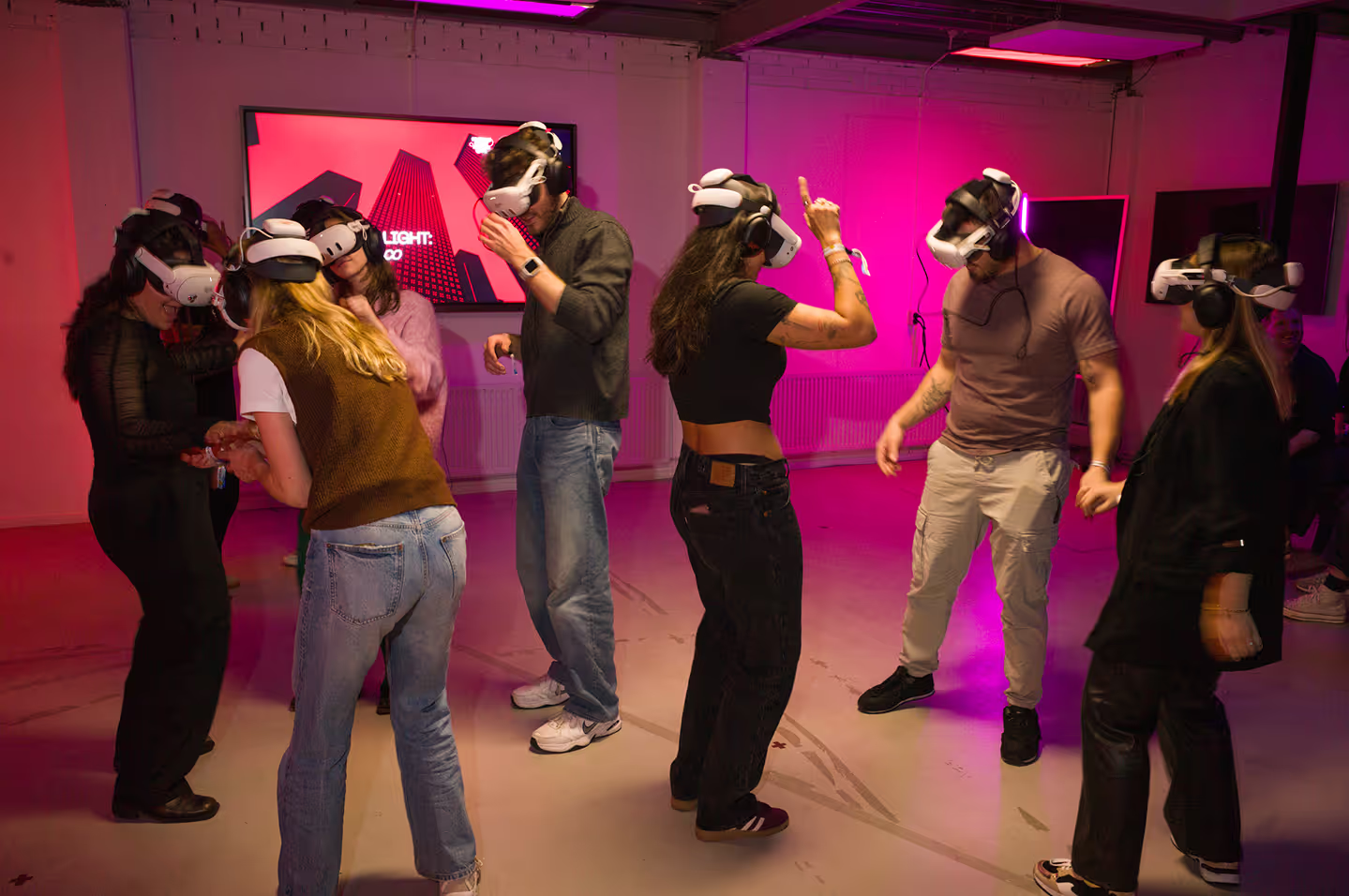
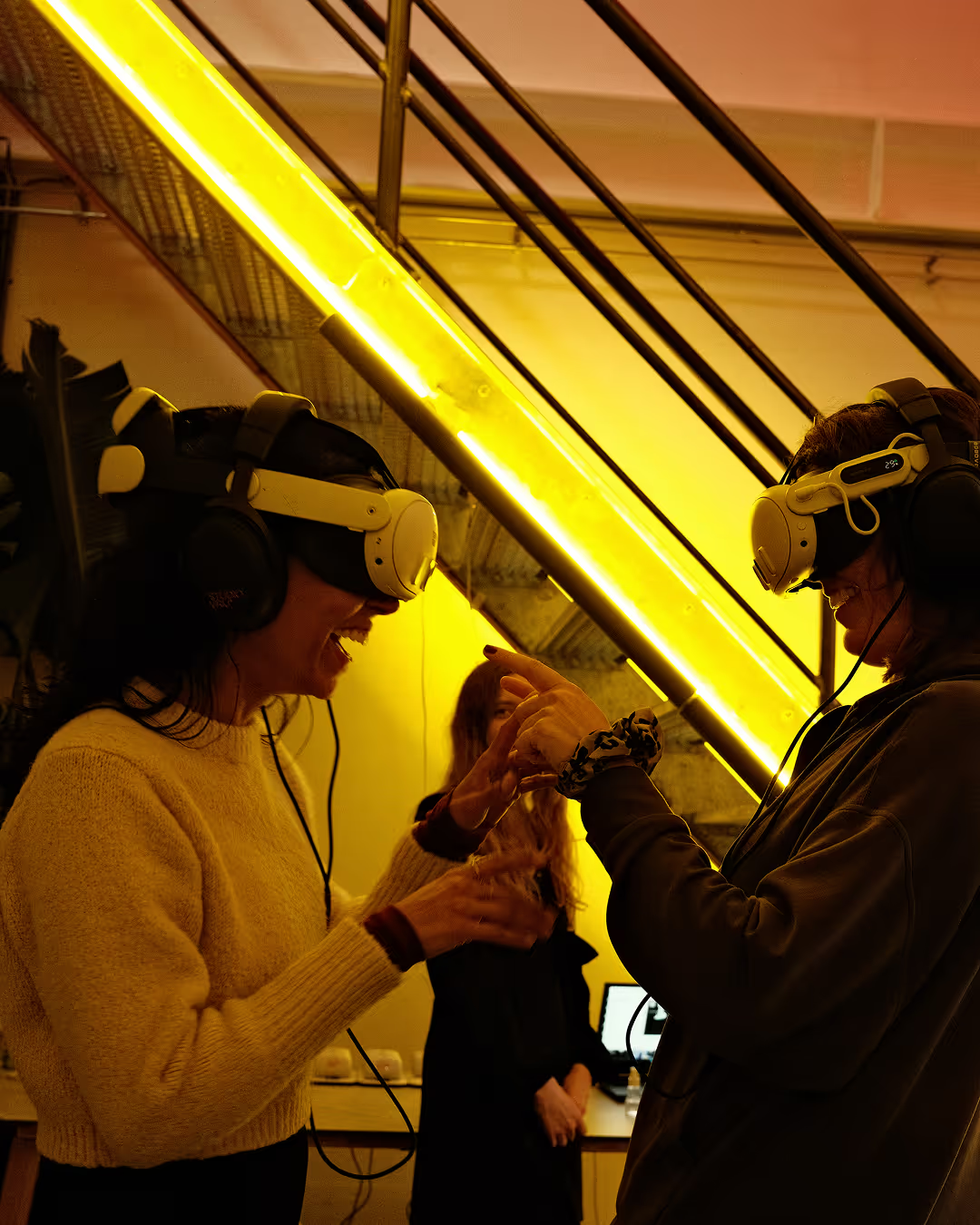
The VR Silent Disco is a great project example, as in this experience up to 12 people can enter a shared virtual dance floor simultaneously. Participants move as avatars that mirror their real bodies, without controllers, or prior knowledge of VR. With a soundtrack created by Brass Rave Unit, the experience invites participants to move in the shared space, and by that to connect with one another.
But none of that works if people arrive nervous, hesitant or sceptical, and that's where the importance of onboarding comes into the picture.
Onboarding: Mindset Switch
People often arrive at our showcases with pre-assumptions: some have tried VR before and found it isolating, while others worry about motion sickness or looking foolish. Our team's job is to acknowledge these concerns, not dismiss them.
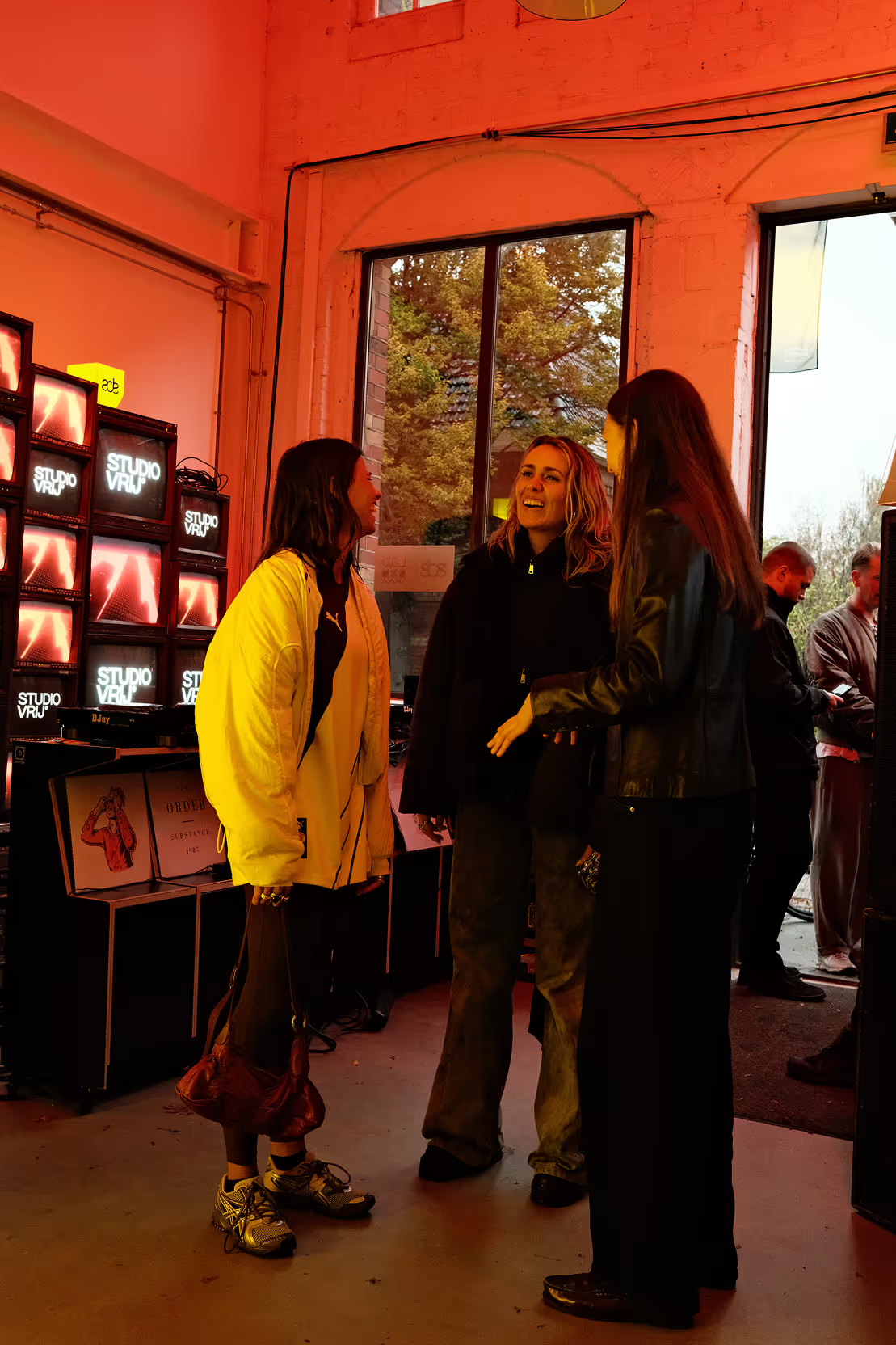
We start with what people can actually see. Before we say anything, we position people where they can watch others already dancing in VR. Seeing people move freely, laugh, dance in ways they wouldn't normally do; that's more powerful than any explanation. People naturally relax watching this. They see joy happening in real-time. They forget their hesitation because they're too curious about what's making people lose themselves.
Then we tell them the things that matter:
It's multiplayer. If they come with friends, they will all have the same experience together. They don't have to go through the experience alone. This single fact relieves enormous anxiety. People are used to VR that isolates them from the people they came with. Knowing they'll share the space changes everything.
You look the same. Everyone wears the same avatar, giving people a sense of anonymity. This lowers self-consciousness dramatically and allows people who arrive a bit shy to let more loose inside VR.
Your body is in control. We use hand and motion tracking, not controllers. The world isn't happening to them, but rather they're moving through it.
You can leave at any time. We emphasize this. The experience isn't something to endure; it's something to explore. If someone feels uncomfortable, they raise their hand and we help them out immediately.
The visuals are intense. We ask about light sensitivity and motion sensitivity. It's a genuine safety check, and people appreciate being asked before, not realizing it after.
The introduction shouldn't feel like a briefing. It's a shift in mindset; from hesitant to curious. And crucially, it's delivered with genuine presence and confidence. We're not pretending we have all the answers or that nothing will ever go wrong. We're saying: we're here, we're paying attention, and we can handle whatever comes. That calm confidence, combined with what they've already witnessed in the people dancing, is what allows people to let go of their hesitation.
Interactions without Instructions
Once people enter the experience, we don't tell them what to do. Instead, we design moments that naturally invite participation.
The first thing they notice is that they're in a space with other people, but everyone looks the same. Finding your friend among identical avatars creates this immediate, playful challenge filled with curiosity and excitement. People naturally gravitate toward each other, trying to figure out who's who through movement, proximity, and intuition. That shared space—bodies moving together, faces indistinguishable—already breaks down self-consciousness before any designed interaction even begins. People start moving and engaging with each other organically.
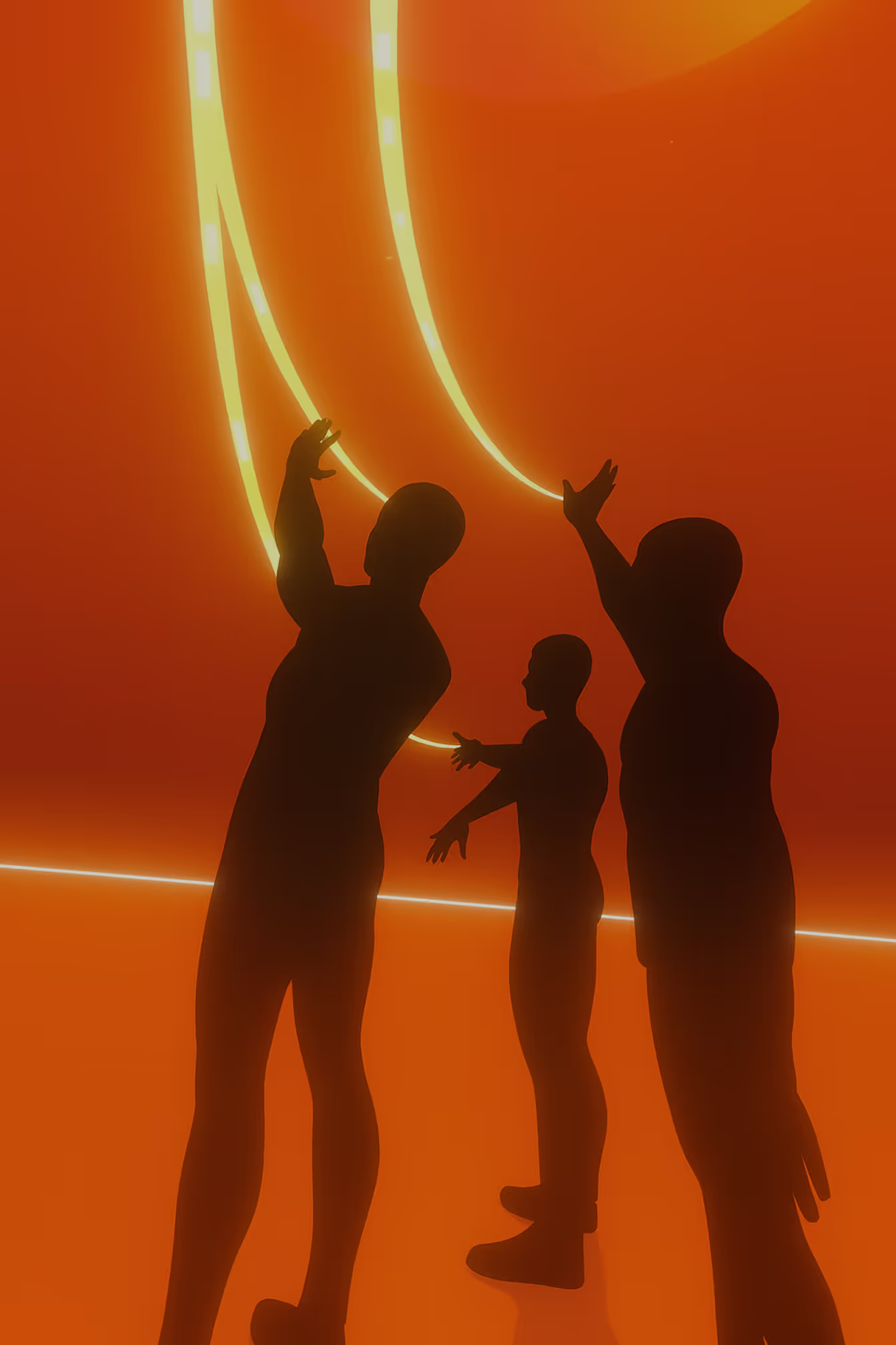
Then the designed moments layer in. A beam of light connects their hand to the virtual sky and people instinctively reach for it. Streams of light flow through space, and people naturally block them with their bodies. Drones circle and project images onto virtual billboards, and people wave at themselves, discovering that everyone's just seeing their own image.
Our challenge is to design experiences that make people naturally interact without any explicit instructions. We implement interactive elements throughout the journey in ways that invite instinctive action, always aligned with the visuals unfolding around them. Since the experience loops, people encounter different interactive moments depending on when they enter, but each element is seamlessly woven into the visual progression. People are already moving with genuine excitement and curiosity; the designed interactions simply meet them where they are, inviting deeper engagement without ever having to say a word.
Offboarding: Return to Reality
The experience automatically ends after about ten minutes, and the headset signals this to participants with a clear instruction to remove it. But returning to reality and processing what just happened takes time.
We usually try to check in with people about their experience, but we're careful not to push. Some are highly verbal, eager to talk through what they felt. Others are quiet, still processing. Many are most expressive through body language; the way they move, their facial expressions, their energy. We read and respond to what each person needs in that moment.
The transformation is visible either way. People arrive hesitant or reserved. They emerge open, animated, sometimes still moving to music only they can hear. Some continue dancing in the waiting area. Whether they talk about it or simply embody it, that shift—from resistant to free—tells us the experience worked. It's what we're actually measuring, not through surveys but through presence.
At InScience, one person's response made this clear. After experiencing Show Me the Light, he lingered around for another hour. He watched others dancing, looked at our website, and asked questions. When a new group came through without a third participant, he volunteered: "Can I go again? I can be the extra person." He went back in and danced actively with the newcomers, trying to amplify their experience. His transformation wasn't just personal; he wanted to extend it, share it, invite others into what he'd felt.
That's what offboarding creates space for. Not feedback extraction, but the realization of what just happened. When it works, people don't just leave satisfied, they want to come back.
Flexibility Over Prevention
Of course, running these experiences smoothly requires more than good design; it requires flexibility. Through our past experiences we've learnt that tech will always fail in unpredictable ways: the headset calibration drifts after four hours; someone enters the menu, or the network hiccups. We can't prevent all of these things, no matter how thorough our pre-production is.
Therefore, our job isn't fixated on prevention. It's on being present, attentive, and flexible enough to solve problems calmly when they arise. We do invest heavily in preparation; calibration takes two hours, every device must be networked, every spatial anchor marked. But we also accept that despite this, something unexpected will happen. The difference is how we respond: without panic, without disrupting people inside the experience, and with the confidence that we can handle it.
The Experience Evolves With Every Showcase
We've toured Show Me the Light to Amsterdam Dance Event, Dutch Design Week, Imagine Film Festival, Nxt Museum, and InScience Film Festival. Each venue brings different spatial requirements, audiences, and challenges. Each one teaches us something new about how people move together, how they break free, how they connect.
The core mission stays the same: create space for strangers to become a collective body, moving to music, freed from self-consciousness by shared anonymity. All this for the same purpose; to show that VR isn't isolating, but instead a connecting medium.
Interested in bringing this to your event? Get in touch. We'd love to hear from you.